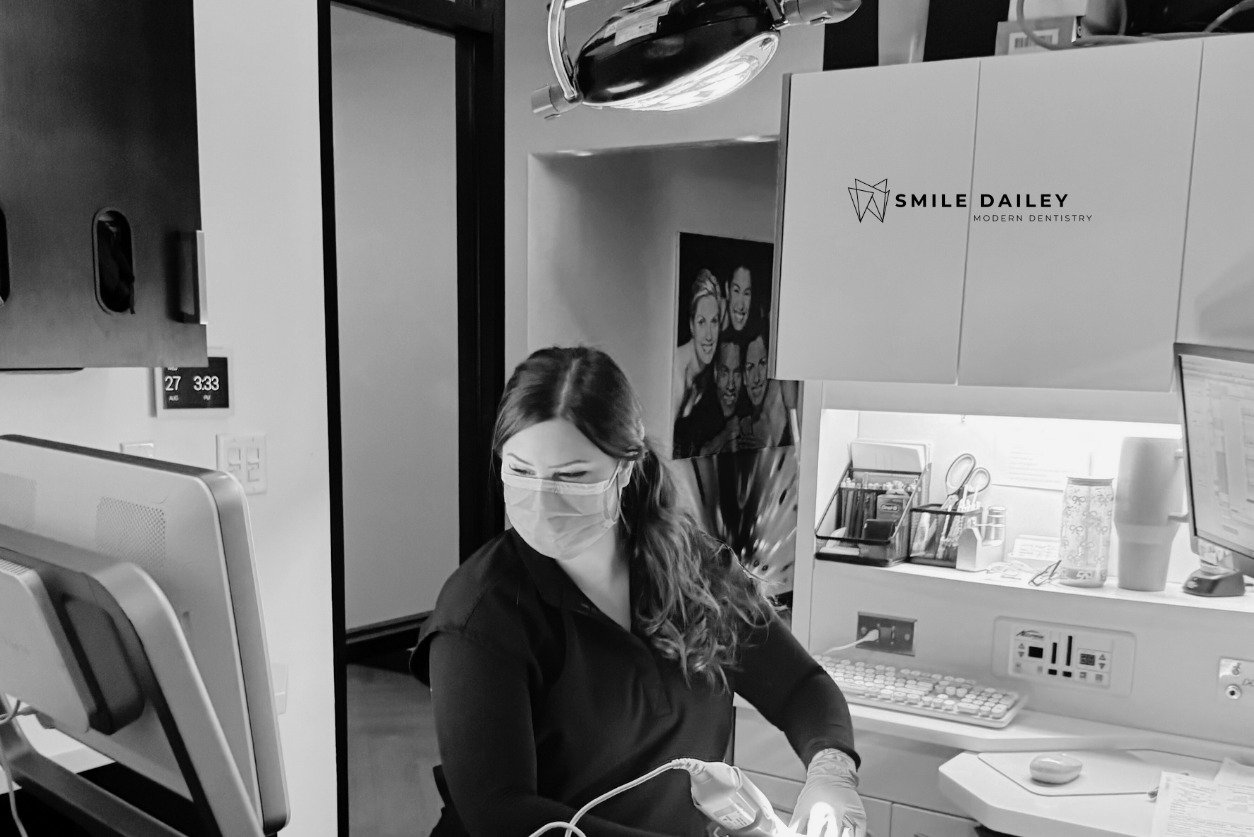
A dental exam and cleaning is a full preventive visit that helps protect both the look and health of your smile. Even if it feels routine, it plays a big role in preventing cavities, gum disease, and bigger dental problems later. A single visit can remove buildup that brushing can’t reach. At Smile Dailey Dental in West Little Rock, the goal is a calm, modern, straightforward visit, without rushing you. Most appointments are simple, comfortable, and easier than many people expect. Understand what’s happening and why.
Key Takeaways
- A dental exam and cleaning protect your teeth, gums, and long-term oral health.
- A dental exam checks teeth, gums, tongue, bite, and jaw, and includes an oral cancer screening.
- A professional cleaning removes plaque and tartar, then polishes and flosses; fluoride may be recommended based on your risk.
- X-rays can find hidden decay, infections, and bone loss that can’t be seen during a visual exam.
- Many adults do well with visits every six months, but timing depends on gum health, cavities, and medical risk factors.
- Deep cleaning is recommended only when gum measurements and signs point to gum disease, not by default.
Dental Exam and Cleaning: Evaluation, Prevention, and Early Detection
The visit has two parts: a clinical exam with the dentist and a professional cleaning with a hygienist. Together, they give a clear picture of your oral health and help catch problems early.
What to Expect During a Dental Exam?
The exam is about finding issues early, before they hurt. The dentist checks each tooth for cavities, cracks, worn enamel, or old dental work (like fillings or crowns) that may be wearing out.
Gums are checked for swelling, bleeding, recession, or signs of gum disease. The dentist may also check your bite and jaw function, since clenching or grinding can damage teeth over time.
An oral cancer screening is part of a complete exam. The dentist looks at your tongue, cheeks, roof of the mouth, and throat, and may gently feel your jaw and neck. It’s quick, routine, and important because early changes are often painless.
If needed, digital X-rays are taken to look under the surface. X-rays can spot cavities between teeth, infections near roots, bone loss from gum disease, and problems under existing dental work, so treatment can stay smaller and simpler.
What Happens During a Professional Dental Cleaning?
A dental cleaning gently removes buildup you can’t fully reach with brushing and flossing alone, then smooths and protects the tooth surfaces to help you stay healthier between visits.
Plaque forms on teeth every day, and if it isn’t thoroughly removed, it can harden into tartar, especially along the gumline. Because tartar bonds to the tooth, it can only be safely removed with professional instruments.
During scaling, your hygienist carefully clears plaque and tartar from the teeth and around the gums, which can reduce irritation and help lower your risk of cavities and gum disease. Next, polishing smooths the tooth surfaces so plaque is less likely to cling and build up as quickly.
Your hygienist will typically floss between teeth, have you rinse, and may recommend fluoride if you’re prone to cavities, have sensitivity, or show signs of weakened enamel. Cleanings also help your care team spot trouble areas early and share simple, personalized home-care tips based on your needs.
How Do The Dental Exam and Cleaning Work Together?
Cleanings remove buildup while exams find and track problems.
Doing only one limits the benefits of the other. Together, a dental exam and cleaning help you avoid surprise dental issues and keep both your smile’s function and appearance on track, especially if you want to stay confident for work, travel, or upcoming events.
FAQ: Dental Exams and Cleanings
| Question | Answer |
|---|---|
| How long does a dental exam and cleaning take? | Most visits take about 45 to 60 minutes, depending on X-rays and how much buildup is present. |
| Is a dental exam different from a cleaning? | Yes. The exam checks for problems and changes. The cleaning removes plaque and tartar to help prevent problems. Most people need both. |
| Do dental exams always include X-rays? | No. X-rays are recommended based on your risk, symptoms, and how long it’s been since your last images. |
| Does a dental cleaning hurt? | Most cleanings feel fine. If your gums are inflamed or you’ve gone a long time between visits, you may feel mild sensitivity that usually improves as gum health improves. |
| How often should exams and cleanings be scheduled? | Many adults do well with visits every six months. Some need more frequent care depending on gum health, medical history, or cavity risk. |
Why Are X-rays Needed In Some Dental Exams?
X-rays aren’t needed every time, but when they are, they show what a visual exam can’t. They can reveal cavities between teeth, bone loss, root infections, and problems under old fillings or crowns. Many of these issues don’t cause symptoms early, so imaging can prevent a small problem from becoming an emergency.
How Often Should Adults Get a Dental Exam and Cleaning?
Many adults do well with preventive visits about every six months. This helps control tartar buildup, supports gum health, and catches decay early. Some people need more frequent visits, especially those with gum disease history, frequent cavities, dry mouth, diabetes, or smoking habits.
Some low-risk patients may not need the same schedule forever, but waiting too long is a common reason small issues turn into expensive ones. The most accurate plan is based on your gum measurements and cavity risk.
A healthy mouth helps prevent cavities, gum disease, and bad breath, boosting self-esteem, speech, and job success.
What Does a Typical Visit Feel Like and How Long Is It?
Most visits with a dental exam and cleaning take 45–60 minutes. For many people, it’s more “pressure and vibration” than pain. Sensitivity is more likely if gums are inflamed or it’s been a long time since your last cleaning.
If you have anxiety, sensitivity, or a strong gag reflex, say so early. A modern office can slow down, adjust technique, and keep you comfortable while still being thorough.
How Can I Prepare For My Dental Exam and Cleaning?
- Bring a list of medications and any recent medical changes (new diagnoses, pregnancy, sleep appliances, etc.).
- Write down symptoms you’ve noticed: bleeding gums, sensitivity, jaw tightness, headaches, or bad breath.
- If you’re a new patient, arrive a few minutes early so you don’t feel rushed.
- If you feel nervous, mention it upfront so the team can pace the visit better.
Understanding How Often To Go and Why It’s Important
A modern dental exam and cleaning in Little Rock will remove plaque and tartar, reach tough spots, and catch early signs of problems. The dentist also checks for gum disease, cavities, and oral cancer.
- How often should you get teeth cleaned?
Many people hear “every six months,” and that’s a common schedule for preventive care. - Is twice a year right for everyone?
Not always. Some people need visits every 3–4 months, especially if they have gum disease, frequent cavities, smoke, or have conditions like diabetes. - Does your health change the number of visits you need?
Yes. Some low-risk patients may do fine with fewer visits, while people with certain health conditions may benefit from more consistent care. - Who may not need visits so often?
People with strong teeth and healthy gums may be able to space visits out, but it’s best to follow a plan based on your actual exam results.
Staying consistent with checkups helps prevent pain, infection, and tooth loss. Preventive visits (like a simple dental exam and cleaning) usually cost much less than major treatments.
Personalized Dental Care: Types of Cleanings
Dentists match the type of cleaning to your needs. The types of teeth cleaning procedures depend on gum health, tartar buildup, and how long it’s been since your last visit.
What is a prophylaxis cleaning, and who qualifies?
A prophylaxis cleaning is the standard option for healthy teeth and gums. It removes plaque and tartar from tooth surfaces and includes polishing. It helps prevent cavities and gum problems.
When is scaling and root planing recommended?
Scaling and root planing (deep cleaning) is used to treat gum disease. It’s recommended when buildup is below the gums, and there are signs like bleeding, bad breath, or gum pockets. It may take more than one visit and may include numbing.
What’s included in periodontal vs gross debridement cleaning?
Periodontal maintenance is ongoing care after gum disease treatment, often every 3–4 months. Gross debridement is used when there’s heavy tartar buildup and the dentist/hygienist needs to clear it first before doing a detailed evaluation.
Benefits Of Regular Dental Visits
Dental exams and cleanings are a simple way to protect your oral health. Exams help catch cavities, gum disease, and other concerns early. Cleanings remove plaque and tartar before they cause damage. Many people do well with two visits per year, while others need more frequent care. Staying consistent helps avoid pain, stress, and bigger bills later.
How does routine cleaning reduce the risk of cavities and gum disease?
It removes plaque and tartar, the main causes of cavities and gum disease. Plaque bacteria can damage enamel and irritate gums. If plaque turns into tartar, you can’t remove it at home. Regular cleanings help stop problems early.
Can dental checkups lower other health risks?
Gum infection and inflammation may affect overall health, especially for people with conditions like diabetes. A dental exam checks your mouth, jaw, and neck for concerns. With X-rays when needed, dentists can find problems early, before pain starts.
What part do fluoride and sealants play in preventive care?
Fluoride strengthens enamel and helps prevent decay. Sealants protect the grooves of back teeth from trapping food and bacteria (often used for children, but sometimes adults, too).
What are other lasting advantages of exams and cleanings?
They can reduce stains, improve breath, and help you avoid major dental work later. Catching problems early usually saves money, time, and stress.
Protect Your Smile Long-Term With a Modern Dental Exam and Cleaning in Little Rock!
Keeping up with both professional cleanings and routine exams is one of the simplest ways to protect your smile long-term: cleanings remove plaque and tartar to help prevent problems, while exams help catch concerns like cavities, gum disease, and oral tissue changes early when treatment is typically easier and more comfortable.
If you’re in Little Rock and overdue for a visit (or you’re ready for a more modern dental experience in West Little Rock), Smile Dailey Dental is accepting new patients and would love to help you get back on track with healthy teeth and gums. Contact us for more information and to learn more about our specials.
Call: 501-448-0032
Location: 17200 Chenal Pkwy, Ste. 250, Little Rock, AR 72223