Thinking about Invisalign but unsure how long it’ll take? You’re not alone. Many patients in Little Rock ask, “When will I see results?” Invisalign treatment involves several clear stages, and each one plays a role. We’ll walk you through every step of the general Invisalign treatment timeline, from your first scan to your finished smile.
Key Takeaways:
- First step: 3D dental scan and smile goals discussion.
- Treatment plan lays out stages, duration, and number of aligners.
- Aligners shipped ~1–2 weeks after scan; worn 22 hrs/day.
- Each tray worn 1–2 weeks; checkups every 6–8 weeks.
- Mild cases: 3–6 months; moderate: 6–12 months; severe: 18–24+ months.
- Teens may finish sooner due to jaw growth.
- Visible changes begin in 3–6 weeks; more progress by 6 months.
- Treatment can slow with missed wear, broken/lost trays, or refinement scans.
- Retainers needed after treatment; initially full-time, then nightly.
- Retainers help prevent relapse; lifelong wear encouraged.
- Invisalign fits best for mild/moderate issues; braces are faster for severe cases.
- Sticking to the plan leads to quicker and longer-lasting results.
The Invisalign Treatment Timeline Creates Lasting Smiles
When adults begin to consider ways to improve their smiles, they often search for a solution that fits comfortably into a busy lifestyle. Traditional braces may still be effective, but many find them inconvenient, uncomfortable, and noticeable. This is why clear aligners have become a preferred choice for so many. Invisalign aligners offer flexibility, comfort, and discretion—all while delivering excellent results. Understanding each stage of the Invisalign treatment timeline helps provide clarity, realistic expectations, and encouragement for those about to begin their journey.
Although the entire process may vary from person to person, learning the common steps adults experience can highlight why Invisalign remains such a popular treatment option offered at Smile Dailey Dental.
The Invisalign Treatment Timeline Begins With Digital Imaging
Every Invisalign treatment timeline starts with a consultation. During this first step, digital scans are completed using 3D imaging technology that maps your teeth in precise detail. This creates a personalized starting point so your dentist can see every angle of your smile. At the same appointment, you discuss your goals—whether reducing crowding, closing spaces, or improving your bite.
Once scans are complete, your dentist designs a treatment plan. This plan outlines each stage of movement, the number of aligners you’ll need, and an estimated duration. Some people need only a short series lasting a few months, while others with more complex issues may take well over a year. Nevertheless, knowing the roadmap at the beginning helps you prepare and stay motivated.
Custom Trays Continue the Invisalign Treatment Timeline
After scanning and planning, your first set of trays is created. These clear aligners, customized to your exact teeth, typically arrive within one to two weeks of your consultation. Each set is worn for about one to two weeks before switching to the next in the series. You usually receive multiple trays at once, allowing you to continue treatment at home between visits.
Because aligners are removable, you take them out only to eat, brush, or drink anything but water. Wearing them about 22 hours each day ensures steady progress. On the other hand, skipping hours regularly slows the timeline, causing delays that extend the overall process.
Regular Checkups Keep the Timeline on Track
Every 6 to 8 weeks, you will visit your dentist to check on progress. These checkups are essential because subtle adjustments may be necessary. At these appointments, your dentist ensures that your teeth are tracking according to the plan and provides additional trays as needed.
In the middle of treatment, new scans may be taken to compare actual results to the expected movement. When teeth are not shifting as planned, refinements are introduced. Refinement trays are designed to make small adjustments. While these may add a little time, they greatly improve final results, making the investment more worthwhile.
Refinements Add Flexibility to the Invisalign Treatment Timeline
Few treatments progress exactly as outlined in the beginning. Teeth can respond differently depending on age, oral habits, and unique anatomy. Mid-treatment refinements help dentists fine-tune results so patients achieve healthier, straighter smiles. Although needing refinements might stretch treatment by a few months, the improvement ensures proper alignment and reduces the risk of relapse in the future.
Retainers Mark the Final Stage of the Invisalign Treatment Timeline
Even after the final tray is worn, your smile journey does not end. In fact, retainers are an important final phase of Invisalign. Teeth naturally attempt to shift back to earlier positions, a process called relapse. To stop this from happening, dentists prescribe retainers that look similar to aligners but are more durable.
In the beginning, retainers are usually worn full-time, except for meals and brushing. Later, most dentists transition patients to nighttime-only wear. Because teeth never completely stop moving throughout life, occasional retainer wear is recommended indefinitely. With consistent use, the investment of time, effort, and money into Invisalign continues to pay off for many years.
Visible Changes Appear Early in the Invisalign Treatment Timeline
Many adults wonder when results begin to show. Interestingly, changes often appear within 3 to 6 weeks of starting. These small improvements—such as reduced gaps or straighter front teeth—boost confidence and motivate patients to continue. In the first month, movement may measure only a millimeter or two, yet these small shifts add up quickly.
Within six months, more dramatic changes can occur. Teeth often look straighter, gaps can close, and crowded areas gradually open. For those with mild cases, six months may even bring treatment close to completion. While timelines differ, steady visible progress is an encouraging aspect of Invisalign therapy.
Case Complexity Impacts the Invisalign Treatment Timeline
One of the largest factors affecting treatment length is case complexity. Mild cases such as small spacing issues might only require 3 to 6 months, while moderate cases like uneven teeth or bite adjustments typically take 6 to 12 months. More severe concerns, including deep overbites or major crowding, may require 18 to 24 months or longer.
Even within these ranges, compliance plays a critical role. Wearing trays less than 22 hours a day can easily extend treatment by several months. In contrast, patients who follow directions carefully and attend every checkup often finish closer to the shorter estimate for their case complexity.
Age And Lifestyle Factors Affect the Timeline
While Invisalign can be used by teenagers and adults, the Invisalign treatment timeline differs slightly depending on age. Teens often respond faster because their jaws are still growing, which makes tooth movement easier. Adults can progress just as well, but consistency becomes more important.
Lifestyle also plays a role. Adults with demanding work or social routines sometimes remove aligners more often than recommended. However, consistent wear ensures that even busy professionals achieve timely results. For those in high-visibility positions, Invisalign offers the added benefit of discretion, making it particularly appealing compared to traditional braces.
Discipline Determines Progress In The Invisalign Treatment Timeline
Because trays are removable, patients are responsible for their own discipline. Unlike braces, which work continuously once bonded to the teeth, aligners rely on daily commitment. It is recommended to wear them 22 hours per day, switch to the next set on schedule, and avoid extended breaks.
When trays are misplaced or broken, treatment slows until replacements arrive. Quick communication with your dentist helps limit delays. Additionally, poor hygiene such as not cleaning trays correctly can impact comfort and confidence, so maintaining routine care makes the journey smoother.
Professional Adaptations Extend or Shorten Treatment
Dentists can sometimes modify treatment to accelerate results. For example, tools such as clear attachments, power ridges, or vibration devices like AcceleDent may speed movement in cases where teeth cooperate well. Switching trays weekly instead of every two weeks is another option for some patients. However, these adaptations still depend on your dentist’s advice and your own compliance.
Invisalign Treatment Timeline Compared With Traditional Braces
Adults often ask whether Invisalign is faster than braces. For mild to moderate cases, Invisalign may indeed finish more quickly, sometimes in as little as six months. Braces, however, are capable of addressing severe orthodontic challenges where strong, constant force is required. This means that for complex bite corrections, braces may outperform aligners in speed and strength.
Nevertheless, Invisalign’s advantages often outweigh the small differences in timeline for many adults. Aligners are nearly invisible, removable for meals, and comfortable for everyday wear. Braces, while powerful, may cause irritation and limit diet. For adults concerned with professionalism and appearance, Invisalign is often the preferred option even if treatment takes slightly longer.
Retention Protects Results Beyond the Treatment Timeline
Retention is key to long-lasting success. Once teeth shift into alignment, stabilizing them ensures they remain in place. Without retainers, teeth may drift, undoing all progress. Most dentists recommend wearing retainers full-time initially and then transitioning to nighttime wear for several years—or even permanently.
Daily habits like biting on pens, skipping retainers, or missing cleanings can undermine results. In contrast, regular dental checkups, good hygiene, and consistent retainer use protect your new smile. Treatments like Invisalign offer long-term value because they not only change appearance but also lower risks of gum disease, jaw pain, and enamel wear.
Long-Term Health Benefits Extend Beyond the Timeline
Although the invisalign treatment timeline focuses on months and years, the benefits extend far beyond. Straighter teeth are easier to brush and floss, which reduces risk of cavities, gum disease, and even tooth loss later in life. Proper alignment also helps with chewing, digestion, and jaw comfort. This means investing in Invisalign is more than cosmetic—it is an investment in lifelong health.
Research, including guidelines from the American Association of Orthodontists, continues to highlight how early and proper correction reduces long-term dental complications. With better health, improved confidence, and reduced treatment needs over time, Invisalign creates far-reaching advantages.
Steps To Achieve The Best Invisalign Treatment Timeline
To maximize results:
- Wear trays for at least 22 hours daily.
- Keep aligners clean with gentle soap and water.
- Switch trays according to your dentist’s recommended schedule.
- Keep every checkup appointment.
- Report any problems quickly, such as lost trays or poor fit.
By following these steps closely, patients not only shorten total treatment time but also achieve more accurate results.
Take the Next Step Toward Your Smile Transformation
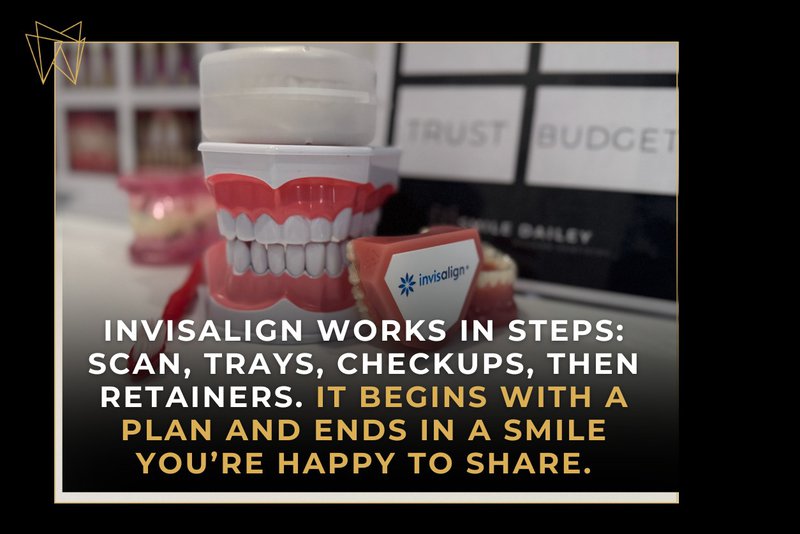
It is clear that the invisalign treatment timeline brings both immediate and lasting rewards. Each stage—scanning, planning, wearing aligners, visiting the dentist, and using retainers—works toward a healthier, straighter smile. Although the duration depends on your unique case, discipline and consistency remain the deciding factors for success.
Ready To Begin Your Journey?
Transforming your smile starts with understanding your options and planning the right path. Invisalign offers comfort, flexibility, and long-term benefits for adults who want lasting change. Contact Smile Dailey Dental today to schedule your consultation and learn how the Invisalign treatment timeline can work for you. Your confident smile is closer than you think.