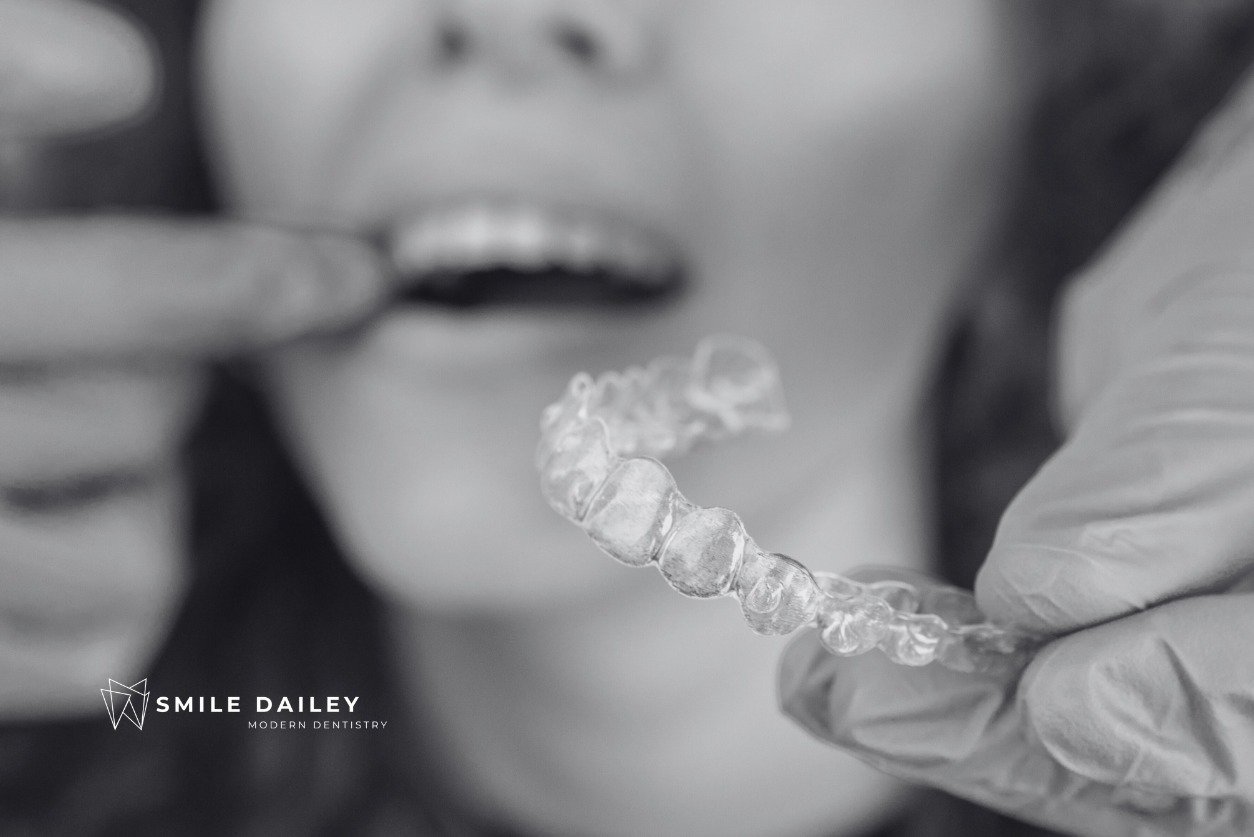
If you're wondering about Invisalign wear time, you're not alone. Many folks in Little Rock begin their Invisalign journey uncertain about the daily commitment required to see effective results. We're here to provide clarity. We'll outline the daily duration needed for wearing your aligners and the consequences of not adhering to this schedule.
Key Takeaways:
- Invisalign must be worn 22 hours/day for best results; 20 hours may be acceptable but is less effective.
- Wearing aligners less than 20 hrs/day, especially 16 hrs or fewer, causes delays, poor fit, relapse, or added costs.
- Aligners should not be worn only at night; part-time wear does not give enough pressure.
- Each tray is usually worn for 7 days; some need 10–14 days depending on progress.
- Never switch trays early without orthodontist approval; it may cause pain or delay treatment.
- Refinement trays are used if progress stalls due to inconsistent wear; they add time to the plan.
- Post-treatment retainers must be worn up to 22 hrs initially, then nightly after 3–6 months.
- Apps like TrayMinder help track use; tools like chewies help trays fit snug.
- Cleaning aligners during meals saves time; routines help with long-term success.
Invisalign Wear Time Matters for Successful Treatment
When it comes to maximizing Invisalign results, one rule rises above the rest: Invisalign wear time makes or breaks the process. Consistency determines how smoothly treatment runs, how long it lasts, and ultimately, how successful your results become.
Dental professionals emphasize a precise goal; therefore, the recommended Invisalign wear time is 22 hours per day. This number indeed ensures your teeth receive continuous pressure to move naturally into alignment. While 22 hours sounds overwhelming, it quickly becomes routine, and consequently, the reward is a healthier, more confident smile.
The Recommended Time Is 22 Hours
Each tray is custom-designed to guide teeth gradually. Removing aligners for more than two hours daily slows progress, creates poor fits for upcoming trays, and increases discomfort.
Building daily routines around wear time also helps. Many patients break their two-hour allowance into small intervals:
- 15 minutes for breakfast
- 30 minutes for lunch
- 60 minutes for dinner
- 15 minutes as a flexible buffer
Because every minute counts, structure keeps trays effective and treatment predictable.
Shorter Wear Time Creates Delays
Some patients assume 20 hours works just as well, but that small reduction increases risks. With less wear, teeth shift backward between uses, trays fit poorly, and refinements often become necessary.
At 16 hours per day, the risks grow significantly. When teeth don't receive adequate pressure, relapse begins, and as a result, the treatment may require new impressions or entirely new aligners. Consequently, every delay adds cost, discomfort, and more time in treatment. Therefore, the most reliable way forward is consistent 22-hour Invisalign wear time.
Missed Wear Time Disrupts Treatment Schedules
Each tray follows a digital sequence. Gaps in usage prevent teeth from aligning correctly, which means trays may stop tracking as planned. Patients often need to remain in older trays longer or restart previous stages.
Missed hours also increase office visits and possible refinements. Instead of steady progress, patients face extra trips, longer treatment, and greater expense. Maintaining steady Invisalign wear time eliminates such setbacks. For general orthodontic guidance, see the ADA’s MouthHealthy resource.
Wearing Invisalign Only at Night Does Not Work
Some patients wonder if nighttime wear is enough. Unfortunately, with only 7–9 hours of daily wear, teeth spend more than half the day unpressured. Interrupted pressure makes trays feel tight, slows results, and prolongs timelines.
Daytime-only wear creates similar challenges. Frequent removals for meals and conversations add up, leaving teeth unsupported for critical hours. Standard Invisalign plans require full-time wear. Patients considering part-time aligners should discuss specific nighttime-only systems with their dentist before making that choice.
Tools and Tips to Reach 22-Hour Wear Time
A 22-hour routine feels challenging at first, but support tools make it manageable.
Helpful strategies include:
- Using tracking apps like TrayMinder for reminders and progress charts
- Timing meals to keep breaks within the daily allowance
- Rinsing aligners every time they are removed
- Soaking trays during meals for quicker cleaning later
- Carrying a toothbrush, floss picks, and a case everywhere
- Switching to new trays at night to sleep through initial tightness
These Invisalign wear time tips lower stress and raise consistency.
Aligner Switching Depends on Invisalign Wear Time
Trays are typically worn for seven days, with some requiring 10–14 days. The key factor is successful Invisalign wear time. Without hitting 22 hours daily, a “seven-day tray” becomes ineffective.
Important points to remember:
- Moving trays forward too early risks relapse or discomfort
- Overextending time in trays can sometimes help if fit is not ready
- Consultation with your provider ensures proper timing
Predictable tray switching depends on consistent pressure from daily Invisalign wear time.
Refinement Trays After Missed Wear Time
Inconsistent use often leads to refinement trays. These are customized sets created if teeth fail to reach the digital projection. Refinements restart progress and often add months to the overall plan.
Causes of refinements include:
- Wearing aligners fewer than 20 hours per day
- Attempting night-only use
- Skipping follow-up checkups
Patients who commit to 22-hour Invisalign wear time are far less likely to face refinements and added cost.
Consistency Equals Predictable Results
Consistency is the foundation of Invisalign treatment. Less than 20 hours creates unpredictable, slower outcomes. Twenty-two hours ensures steady progress, smoother tray fits, and fewer painful adjustments. Constant fit also prevents soreness associated with reinserting trays after long breaks.
Practical ways to stay consistent include:
- Setting alarms after meals
- Using habit-building apps on your phone
- Printing goal-smile photos for daily motivation
Small behavioral reinforcements make Invisalign wear time easier to maintain and far more effective.
Retainer Wear Time Protects Results
Patients often celebrate finishing Invisalign, but results can fade without retainers. Teeth naturally drift back unless held in position. For the first 3–6 months post-treatment, retainers should be worn full-time, close to 22 hours daily. Afterward, nightwear is usually sufficient with provider approval.
Retainers look like Invisalign trays but serve a new purpose: maintaining, not moving. Whether clear or fixed, they prevent relapse and preserve treatment investment. Cleaning and replacing retainers as needed ensures patients enjoy long-lasting results.
Invisalign Wear Time by Risk & Benefit
| Hours Worn Daily | Expected Outcome | Risk of Delays |
|---|---|---|
| 22 hours | Teeth move predictably, trays fit | Lowest delay risk |
| 20 hours | Teeth move slowly | May need refinements |
| 16–18 hours | Teeth drift backward | High chance of new trays needed |
| Under 16 hours | Trays fail to fit, relapse occurs | Treatment restarts often needed |
Investing in Invisalign Provides Lifelong Rewards
Choosing Invisalign is about more than appearance. Straight teeth are easier to clean, less likely to decay, and more comfortable for chewing. Yet results only come with consistent habits.
Commitment to 22-hour wear time, following tray schedules, and using supportive tools ensures lasting improvements. The American Dental Association confirms one truth: aligners only work when worn correctly. By respecting wear time, patients protect their smiles and safeguard treatment success.
Ready to Begin Your Smile Transformation?
Your best smile begins with commitment—and Invisalign wear time provides the foundation. With steady 22-hour daily use, treatment becomes predictable and rewarding. To see inspiring outcomes, explore Invisalign before-and-after transformations. If you are ready for your dream smile, schedule your Smile Makeover consultation today at Smile Dailey Dental.